Driving Japan: New Safety Measures for Foreign Visitors
Japan is adding clearer road markings and warning signs around Fukuoka, New Chitose and Naha airports. Here’s where crashes happen—and how to drive Kyushu more safely.
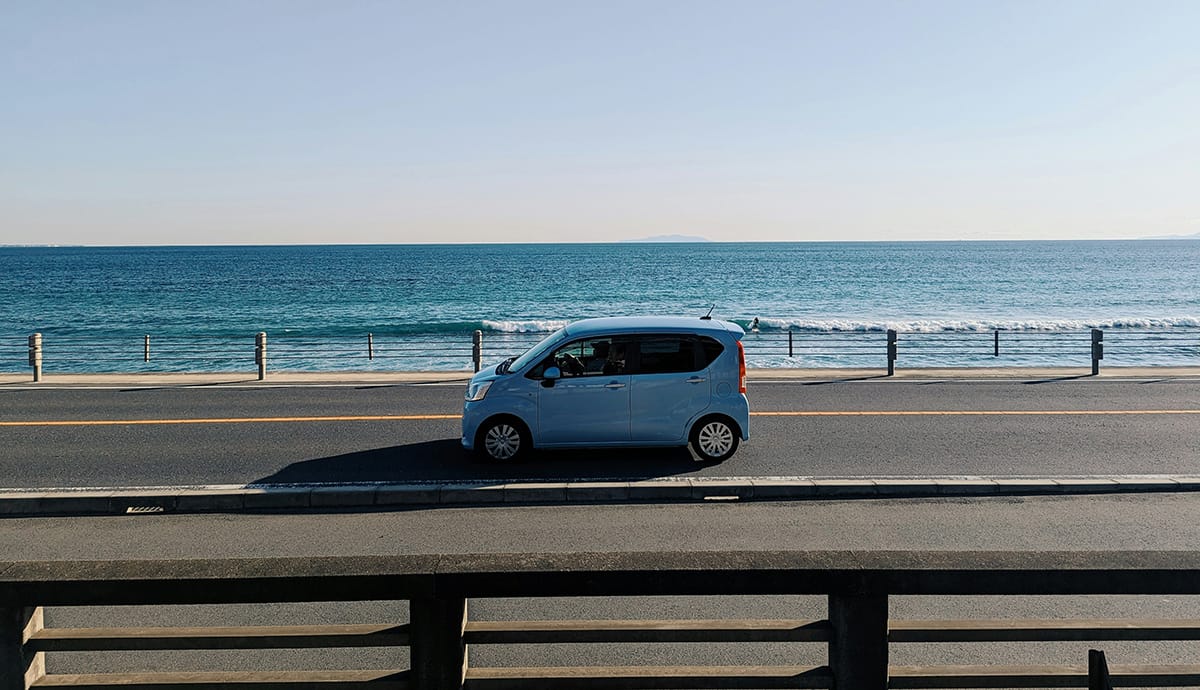
Driving is one of the most convenient ways to explore Japan, especially beyond the major cities, and the country’s roads are generally well maintained. But accidents involving international visitors have been rising in recent years. Even travellers who are already used to right-hand-drive cars and driving on the left can be caught out by unfamiliar road layouts and local rules.
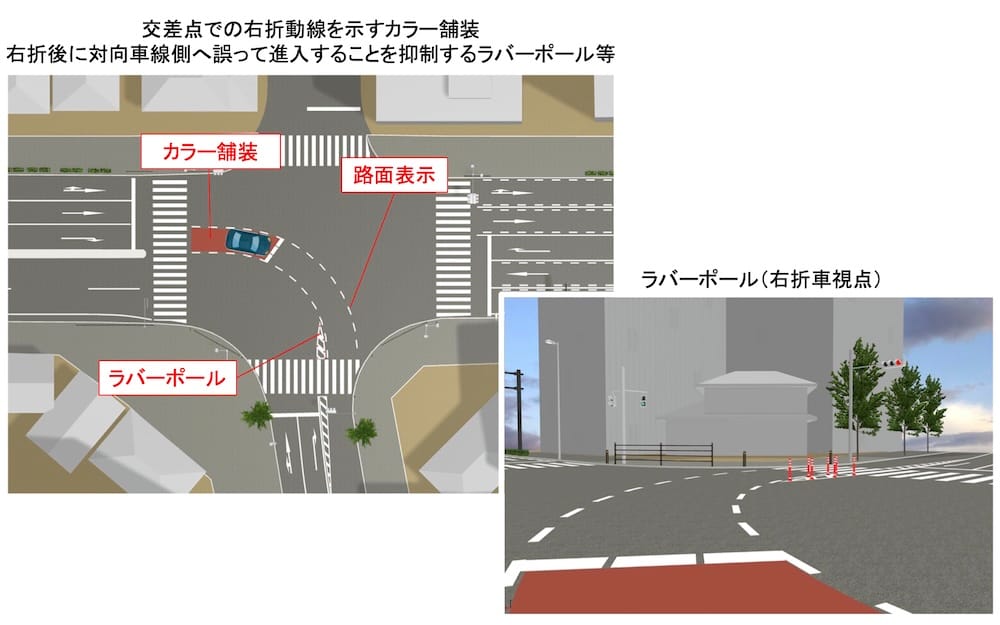
In July 2026, Japan’s Ministry of Land, Infrastructure, Transport and Tourism announced that road-safety measures aimed at reducing rental-car accidents involving overseas visitors would move from trial status to official implementation. Fukuoka, New Chitose and Naha were selected as the first locations. On national highways around the three airports, authorities will add coloured road markings showing the correct path for right turns, flexible bollards to prevent drivers from entering oncoming lanes after turning, and signs reminding motorists to keep left. The work is scheduled to be introduced in stages by March 2027. Below is a guide to the new measures, known accident hotspots and the habits worth adopting from pick-up to drop-off.
What new road-safety measures are being added around airports?
The ministry says three types of safety feature will be installed on nationally managed highways near the airports: coloured road surfaces showing the correct route for right turns (カラー舗装), flexible rubber bollards designed to stop drivers entering the oncoming lane after turning (ラバーポール), and signs reminding motorists to keep left. These will be concentrated around clusters of rental-car offices and along the main routes used by newly arriving drivers.
The idea itself is not new. For several years, the ministry has used ETC2.0 vehicle data to identify places where overseas drivers brake sharply or speed, then tested different countermeasures. After confirming that warning signs could reduce sudden braking, officials decided to move from a pilot programme to a formal rollout. Fukuoka and the other two airports were chosen because they serve large numbers of international rental-car customers, many from countries where traffic drives on the right, and because key routes around the airports include national highways managed directly by the government. Authorities will first analyse traffic data from the busy summer travel season, then begin installing the measures during fiscal 2026, which ends in March 2027. Exact locations and progress may change, so check the latest official updates before travelling.
Why are international drivers more likely to have accidents?
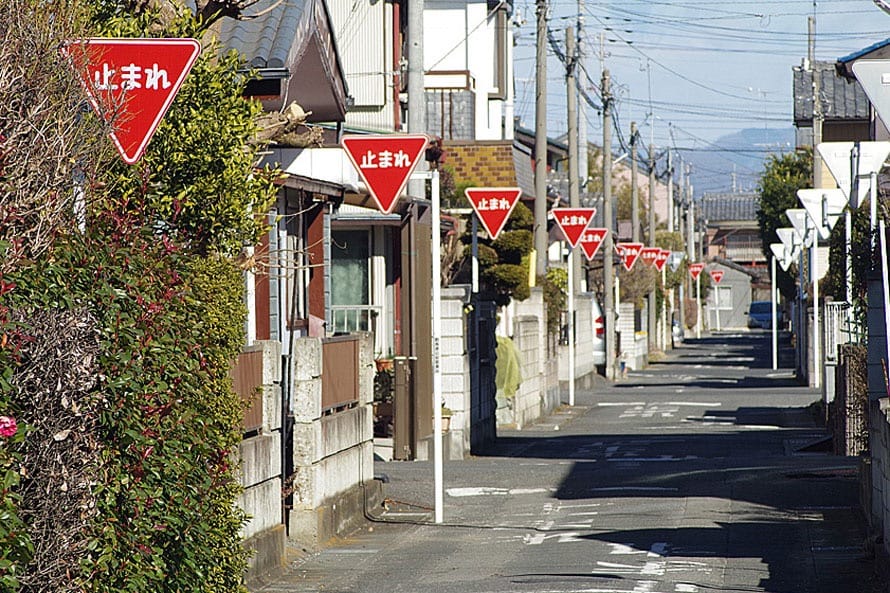
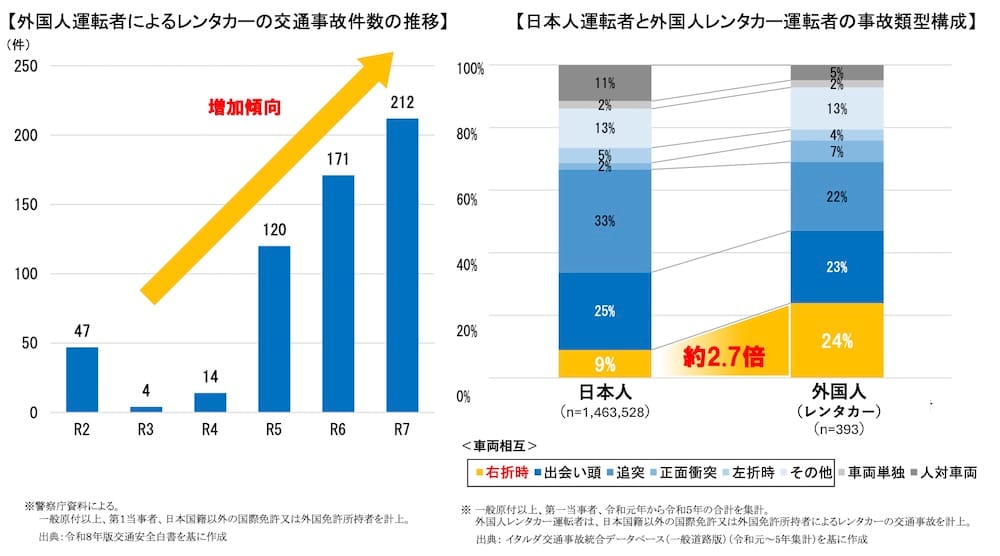
The biggest issue is unfamiliarity with driving on the left in a right-hand-drive car. During a right turn, drivers may accidentally enter the oncoming lane. Two other common causes are failing to check carefully at intersections and not coming to a complete stop at a 「止まれ」 (stop) sign. Railway crossings are another major danger. In Japan, you must stop completely before the line, even when the barriers are raised, then look both ways before proceeding. In July, a car driven by visitors from Hong Kong stopped on a railway crossing in Hokkaido and collided with a JR train.
The number of reported accidents has continued to climb. Rental-car accidents involving drivers using international or overseas licences rose from 47 in 2020 to 212 in 2025. The increase has been even more striking around Mount Fuji: Yamanashi Prefectural Police recorded 975 rental-car accidents involving international visitors in 2025, more than 20 times the figure four years earlier. Five involved injuries. Another 566 cases were recorded in the first five months of 2026, putting the year ahead of the same period in 2025.
Which roads in Kyushu have been the biggest trouble spots?
According to data from a 2017–2018 trial around Fukuoka Airport, two sections of the Oita Expressway were identified as sudden-braking hotspots for international drivers. They are worth noting if you are planning a Kyushu road trip.
| Road section | Direction | Why it is hazardous |
|---|---|---|
| Hita IC to Amagase-Takatsuka IC | Towards Fukuoka | A series of downhill bends where drivers may enter too fast and brake sharply |
| Before the entrance to Kusu SA | Towards Oita | A left-hand bend with poor visibility immediately before the entrance, making sudden braking more likely |
| Chikugo-Ogori IC to Asakura IC | Both directions | A higher number of speeding incidents |
The same data showed that South Korean visitors made up about 64% of international rental-car customers at Fukuoka Airport, while travellers from Hong Kong and Taiwan together accounted for around 23%. In other words, these hotspots were identified using data from the very groups most likely to be driving these routes.
How to stay safe from pick-up to drop-off
Four habits make the biggest difference: when turning right, aim for the nearest left-hand lane on the road you are joining; slow down before entering a bend; come to a complete stop at every 「止まれ」 sign and railway crossing; and place a 「外国人運転」 (“international driver”) sticker on the back of the car to alert motorists behind you.
When collecting your car, ask the rental company for multilingual safety information and a 「外国人運転」 sticker. Some insurers, including Aioi Nissay Dowa Insurance, are also developing apps for overseas rental-car users, with voice guidance in English, Korean and Chinese plus warnings about accident-prone locations. The app is expected to launch during the current fiscal year, so check whether it is available before your trip.
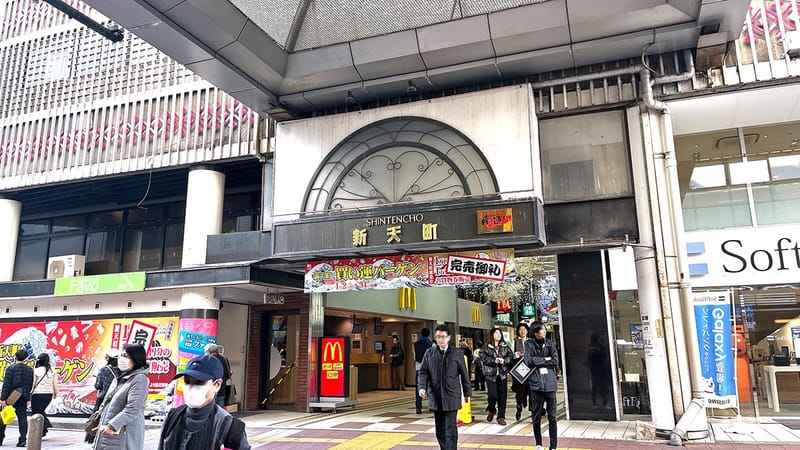
Once you are on the road, be especially careful around Hakata and Tenjin in central Fukuoka, where wide, multi-lane one-way streets are common. Avoid sudden lane changes and hard braking, and leave plenty of space between vehicles. On longer drives, take regular breaks—fatigue is one of the main reasons reaction times slow down.
Frequently Asked Questions
What documents do I need to rent and drive a car in Japan? The requirements depend on where your licence was issued. Travellers from Hong Kong, for example, cannot drive using a Hong Kong licence alone: they must carry an International Driving Permit issued by the Hong Kong Transport Department together with their full Hong Kong driving licence. Hong Kong’s permit is issued under the 1949 Geneva Convention on Road Traffic and is valid in Japan. Taiwan follows a different system because it is not a party to that convention: Taiwanese visitors need their Taiwan licence plus an approved Japanese translation, such as one issued through the Japan Automobile Federation (JAF). Do not assume the rules are the same for every country or territory, and confirm the latest requirements with your rental company before departure.
Which Japanese driving rules do international visitors most often miss? Four rules are especially important:
- At a 「止まれ」 sign, come to a complete stop rather than rolling through slowly
- When turning right while driving on the left, enter the nearest left-hand lane on the road you are joining
- Do not turn right on a red light; this differs from the rule in some places where traffic drives on the right
- Come to a complete stop before every railway crossing, just as you would at a 「止まれ」 sign
Will the new measures introduced in 2026 affect routes or add fees? No. The changes consist of road markings, bollards and signs. There are no new charges or travel restrictions; the aim is simply to guide drivers safely through right turns and keep-left sections.
Are similar measures planned around other airports in Kyushu? For now, Fukuoka Airport is the only location in Kyushu included in the initial rollout. The ministry says it may expand the programme depending on the results, so check the latest announcements before travelling.
Are there any tools for drivers unfamiliar with Japanese roads? Yes. Some insurers are introducing multilingual navigation apps with voice guidance and warnings about accident hotspots. You can also ask your rental company for multilingual safety information and a 「外国人運転」 sticker, which may help other motorists understand that you are unfamiliar with local roads.
Fukuoka is one of the most popular starting points for a Kyushu road trip, and the new measures should make the route out of the airport easier to follow. Still, safer driving ultimately comes down to good habits: keep left, slow down before bends and stop completely where required. Do that, and Kyushu’s roads are a pleasure to explore.
Source: Ministry of Land, Infrastructure, Transport and Tourism